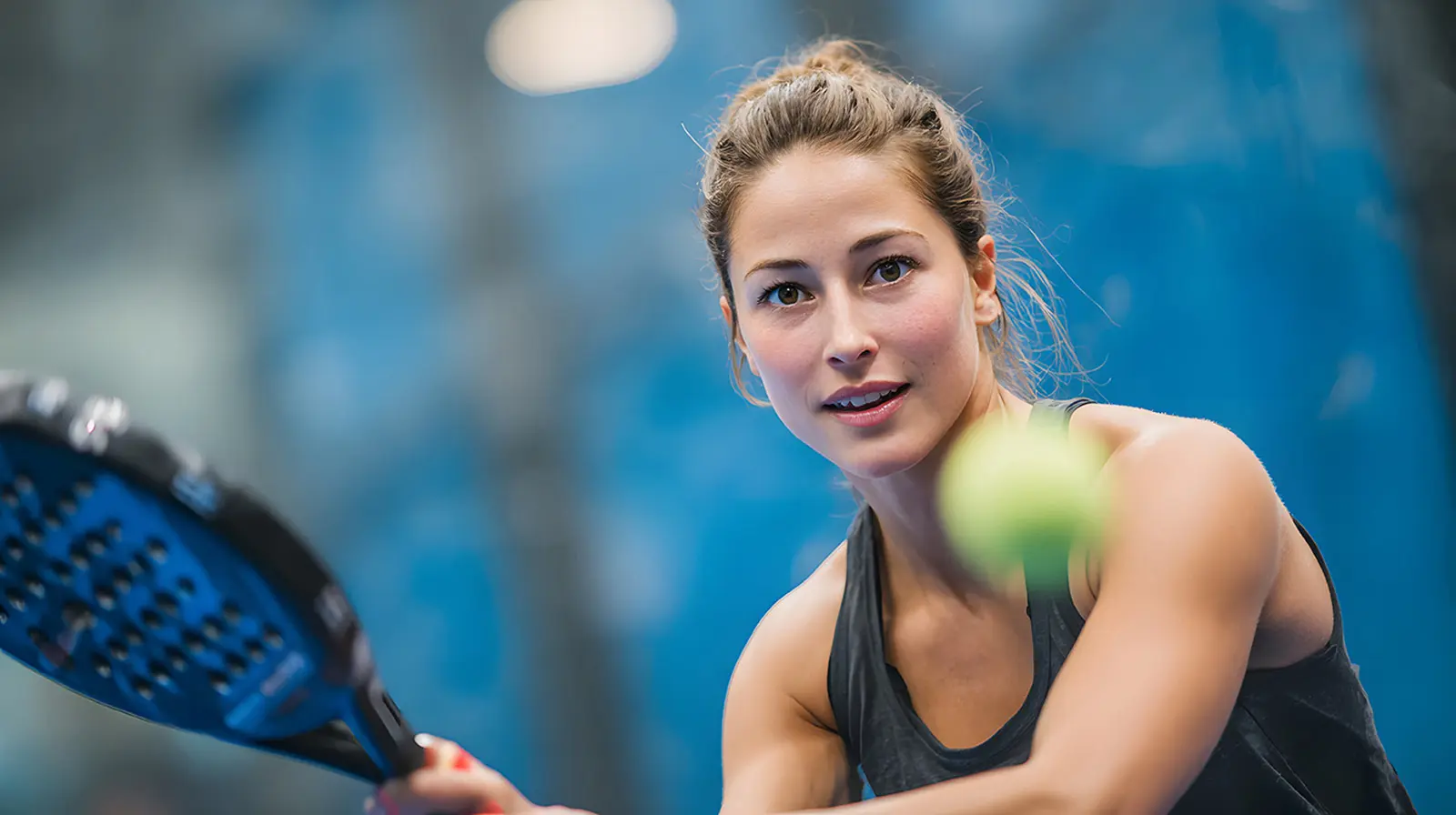
Top 3 Markets to Launch a Padel Club in 2026
Where the padel opportunity is biggest — and why Latino demographics are the key signal

CourtSource Team
Editorial
Padel is the world's fastest-growing racquet sport — but in the United States, it's still in its infancy. With just 267 venues nationwide, the U.S. padel market looks a lot like pickleball did in 2015: tiny, passionate, and about to explode.
Globally, padel has over 25 million active players, primarily concentrated in Spain (where it's the #2 participation sport behind soccer), Argentina, Mexico, and across Latin America. The sport has been spreading rapidly through Europe — Italy, Sweden, and the UK have seen 300%+ growth in the last five years.
The U.S. is next. And the question isn't if padel will take off here — it's where.
"Padel's U.S. growth will follow the Latino community — the same way yoga followed the wellness community and CrossFit followed the military community."
The Current U.S. Padel Landscape
Here's where padel stands today, according to the CourtSource database:
| City | Venues | Courts |
|---|---|---|
| Miami | 18 | 70 |
| Houston | 8 | 14 |
| Orlando | 8 | 4 |
| Los Angeles | 7 | 3 |
| San Diego | 6 | 9 |
| San Francisco | 5 | 5 |
| Tucson | 5 | 15 |
| Brooklyn | 4 | 10 |
| Boston | 4 | 5 |
| Chicago | 3 | 6 |
| Dallas | 3 | 3 |
| Austin | 3 | 2 |
| Philadelphia | 3 | 4 |
| Total U.S. | 267 | — |
The pattern is clear: Miami dominates, accounting for nearly 7% of all U.S. padel venues by itself. But beyond Miami and a handful of early-mover cities, the landscape is nearly empty.
Our Methodology: Why Latino Demographics Are the Key
Unlike pickleball — which grew organically through retirement communities and park & rec departments — padel's U.S. growth will be driven by cultural affinity. The sport is embedded in the social fabric of Spain and Latin America. It's not just a sport there; it's a lifestyle. People play padel the way Americans play golf — it's where business deals happen, where friendships deepen, where weekends revolve.
This means the cities with the highest potential for padel adoption are those with:
- → Large Latino populations — the natural early-adopter community
- → Higher median household incomes — padel clubs require significant investment ($500K–$2M per court including enclosure), so court fees and memberships run higher than pickleball
- → Strong population growth — growing metros with inbound migration from padel-playing countries
- → Few or zero existing padel facilities — first-mover advantage is everything in an emerging sport
We cross-referenced these factors for every major U.S. metro. Here are our top three.
#1: Phoenix–Mesa–Scottsdale, AZ
The single biggest padel opportunity in America
| Metric | Value |
|---|---|
| Metro Population (2024 est.) | 5,100,000 |
| Latino Population (%) | 31.2% |
| Latino Population (est.) | ~1,590,000 |
| Padel Venues in CourtSource | 0 |
| Median Household Income | $78,300 |
| Population Growth (2020–2024) | +8.9% |
Phoenix is the fifth-largest metro in America with 5.1 million residents — and zero dedicated padel venues in the CourtSource database. Zero.
Let that sink in. A metro with 1.59 million Latino residents — many with cultural connections to Mexico, where padel is growing rapidly — has no place to play padel. Meanwhile, Tucson (population 1 million) somehow has 5 venues and 15 courts. The Phoenix gap is extraordinary.
The metro is also a magnet for domestic migration. Phoenix added over 400,000 residents between 2020 and 2024, many from California — a state where padel awareness is already building (LA has 7 venues, San Diego has 6). These transplants bring padel awareness with them.
The existing racquet sport infrastructure is strong: Mesa alone has 38 pickleball venues with 357 courts. The Phoenix metro clearly has an appetite for paddle sports. Padel is the natural next step.
The play: A 6–10 court indoor padel facility in Scottsdale or North Phoenix, targeting the affluent, health-conscious demographic that already spends heavily on fitness and racquet sports. The Scottsdale corridor has median household incomes exceeding $100K and a concentration of luxury fitness facilities. A padel club with a premium bar/lounge would fit perfectly into this ecosystem.
#2: San Antonio, TX
The most Latino-dense major metro — with zero padel courts
| Metric | Value |
|---|---|
| Metro Population (2024 est.) | 2,700,000 |
| Latino Population (%) | 56.4% |
| Latino Population (est.) | ~1,520,000 |
| Padel Venues in CourtSource | 0 |
| Median Household Income | $65,800 |
| Population Growth (2020–2024) | +5.8% |
San Antonio is the most culturally aligned padel market in America. 56.4% of the metro population is Latino — the highest percentage of any top-25 U.S. metro. That's 1.52 million people with deep cultural ties to countries where padel is a way of life.
The city's proximity to the Mexican border adds another dimension: cross-border cultural exchange. Mexican padel culture is booming — the Mexican Padel Federation reports 500,000+ active players and the number of courts has doubled since 2022. San Antonio's deep connections to Monterrey, Mexico City, and other Mexican metros create natural awareness channels that don't exist in non-border markets.
The median household income ($65,800) is lower than Phoenix or Denver, but it's important to look beyond the average. San Antonio has affluent submarkets — the Stone Oak corridor, Alamo Heights, and the far North Side — where household incomes top $100K and the demographics align perfectly with padel's target audience.
Houston (90 miles away) has 8 padel venues, proving the Texas market is receptive. But San Antonio — despite having a higher Latino population percentage — has zero.
The play: A mid-market padel club (4–6 courts) in the Stone Oak or Alamo Heights areas, positioned as a social club rather than a pure sports facility. Bilingual programming, league nights with food and drinks, and partnerships with local Mexican and Latin American business associations. The pricing should reflect the market — slightly lower than Miami or Scottsdale, but premium for San Antonio.
#3: Denver–Aurora–Lakewood, CO
The fitness-obsessed market with affluent demographics and zero padel
| Metric | Value |
|---|---|
| Metro Population (2024 est.) | 2,990,000 |
| Latino Population (%) | 23.4% |
| Latino Population (est.) | ~700,000 |
| Padel Venues in CourtSource | 0 |
| Median Household Income | $92,800 |
| Population Growth (2020–2024) | +6.8% |
Denver is America's fittest metro. The city consistently ranks #1 or #2 in national fitness indices. Per-capita spending on health, wellness, and recreation is among the highest in the country. And the median household income of $92,800 is the highest of any market on this list.
Denver also has a proven appetite for racquet sports. The pickleball scene is strong — 55 venues, 179 courts — and growing fast. Colorado Springs (40 miles south) adds another 40 venues and 228 courts. The Front Range corridor is clearly racquet sport-hungry.
While Denver's Latino population (23.4%) is lower than Phoenix or San Antonio, the 700,000 Latino residents still represent a substantial community. More importantly, Denver's padel opportunity isn't limited to the Latino demographic — it extends to the broader fitness enthusiast and trend-adopter population. This is a city that adopted CrossFit early, embraced boutique fitness, and is always hunting for the next athletic experience.
The indoor element is critical. Denver's climate — cold winters, 300+ days of sunshine but with significant temperature swings — makes indoor paddle sports particularly attractive October through April. Pickleball players who want variety will naturally gravitate toward padel as courts become available.
The play: A premium 6–8 court indoor padel facility in the RiNo/LoDo district or Cherry Creek area, targeting affluent 28–50-year-old fitness enthusiasts. Position it as a luxury fitness experience comparable to Equinox or Life Time, not a sports facility. Think: artisan coffee bar, post-match recovery area, curated retail. Price at the top of the market — Denver will support it.
Head-to-Head Comparison
| Metro | Population | Latino % | Padel Venues | Income | Growth |
|---|---|---|---|---|---|
| Phoenix | 5.1M | 31.2% | 0 | $78.3K | +8.9% |
| San Antonio | 2.7M | 56.4% | 0 | $65.8K | +5.8% |
| Denver | 2.99M | 23.4% | 0 | $92.8K | +6.8% |
| Miami (reference) | 6.2M | 69.4% | 18 | $63.4K | +4.2% |
The Economics of a Padel Club
Padel facilities require significantly more capital than pickleball — the glass-and-steel enclosed courts cost $80,000–$200,000 each depending on whether they're indoor or outdoor, plus the structural requirements for the enclosures. Here's a rough breakdown for a 6-court facility:
| Item | Estimated Cost |
|---|---|
| 6 padel courts (installed) | $600K–$1.2M |
| Facility build-out (25,000 sq ft) | $300K–$600K |
| Amenities (bar, lounge, pro shop) | $150K–$300K |
| Lighting, HVAC, audio | $100K–$200K |
| Working capital (6 months) | $150K–$250K |
| Total | $1.3M–$2.55M |
The revenue model is compelling. With 6 courts operating 14 hours/day at $60–$80/hour average (including peak/off-peak mix), a well-run padel facility can generate $1.5M–$2.5M in annual revenue. Add memberships, coaching, retail, and F&B, and the unit economics work — especially in markets with zero competition.
The first-mover advantage in padel is massive. In a market with zero venues, you don't just capture market share — you create the market. You define the pricing, the culture, the community. That advantage compounds over years as you build the player base that any future competitor will have to fight for.
Honorable Mentions
- → Las Vegas, NV — 2.3M metro, 32% Latino, strong tourism angle (padel as a resort amenity). Currently 0 dedicated padel venues.
- → Charlotte, NC — 2.8M metro, fastest-growing in the Southeast, strong corporate presence. 0 padel venues and emerging pickleball scene suggests appetite for paddle sports.
- → Chicago, IL — Already has 3 venues and 6 courts, but at 9.5M metro residents, the supply is laughably thin. The large Mexican-American community (30% Latino metro) is a strong cultural fit.
- → Dallas–Fort Worth, TX — 8.1M metro with only 3 venues and 3 courts. The math speaks for itself, but we already called out DFW in our pickleball market analysis — it's underserved in everything.
Research Your Padel Market on CourtSource
Explore our database of 267 padel venues alongside 18,300+ pickleball venues to map the competitive landscape in any U.S. metro. Identify gaps, analyze density, and validate your market thesis.
Explore Padel Venues →All padel venue counts sourced from the CourtSource database as of March 2026. Population and demographic estimates from U.S. Census Bureau (2024 estimates) and American Community Survey. Latino population percentages include all persons of Hispanic or Latino origin regardless of race.
Find Padel & Pickleball Courts Near You
Enter your zip code to discover padel and pickleball venues within 25 miles.
Searching within 25 miles of your location